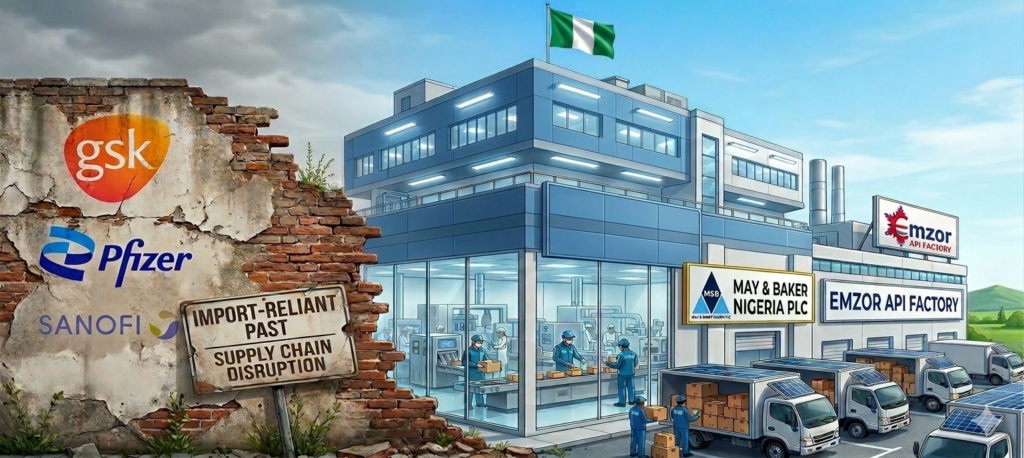
The Nigerian Pharma Industry has come a long way. For decades, the medicine cabinets of Nigerian households were dominated by a familiar set of global emblems. From the blue-and-orange of GlaxoSmithKline (GSK) to the clinical precision of Sanofi and Pfizer, “foreign-made” was often synonymous with “trusted.”
However, there have also been lacunas created in access to their medications from time to time, as these organizations tend to come in when the economy is great for business, and depart when the tides turn. This provided incentives for local players like Fidson and May & Baker, to also stake a claim within the industry.
All but one of these multinational companies had had to leave at one point or another. That company was GSK until 2023, when they also did the unthinkable, considering the reputation they had built as the industry’s number one.
Again, the landscape of the Nigerian Pharma Industry has shifted beneath our feet. What began as a ripple of concern turned into a tidal wave between 2023 and 2025, as a succession of pharmaceutical titans exited the country or drastically scaled back their presence.
The departure of GSK and Sanofi sent shockwaves through the market, causing the prices of asthma inhalers and life-saving antibiotics to triple overnight. But they weren’t alone. Pfizer, a cornerstone of the industry for years, joined the exodus, while Janssen (Johnson & Johnson) transitioned to a third-party distribution model that effectively ended its direct commercial footprint.
Even those who stayed, like Novartis and Novo Nordisk, were forced to make concessions—scaling down local operations,and grappling with an unsustainable foreign exchange environment that made imported products a gamble few could afford.
To many, this mass departure signaled a terminal crisis for the Nigerian Pharma Industry. Instead, it has become the sector’s most significant “pressure test.” In the vacuum left by these global giants, a new narrative is being written—not in London or Paris, but in Nigerian industrial hubs. Local powerhouses like Emzor, Fidson Healthcare and May & Baker are no longer merely “generic alternatives.”
By leveraging bold new government incentives and aggressive capacity expansions, these local giants are transforming from survivors into the new architects of Nigeria’s medicine security.
As we move through 2026, the question is no longer whether we can survive without the multinationals, but how quickly our local industry can rise to lead the continent.
Check this Out! Revolutionizing Hope: Transforming Pharmaceutical Regulation in Nigeria
Nigerian Pharma Industry: The Policy Wind Beneath Their Wings

The sudden vacuum in the pharmaceutical market could have been catastrophic if not for a series of aggressive regulatory interventions. Recognizing that the “business as usual” model of heavy import reliance was no longer sustainable, the Federal Government pivoted toward a policy of medical industrialization. At the heart of this shift is the 2024 Presidential Executive Order on Increasing Local Production of Healthcare Products, a landmark directive that has redefined the cost structure for Nigerian manufacturers.
The 2024 Executive Order: Removing the Handbrake
Signed in June 2024 and fully operationalized by March 2025, the Executive Order introduced sweeping fiscal incentives designed to lower the barriers to entry for local production. Key provisions include:
- Zero Tariffs and VAT Waivers: The removal of import duties and Value-Added Tax on 875 designated items, including Active Pharmaceutical Ingredients (APIs), excipients, and essential raw materials.
- Machinery Exemptions: Zero tariffs on specialized pharmaceutical machinery and equipment, allowing companies to upgrade their facilities without the prohibitive “import tax ” that previously stifled growth.
- Market-Shaping Mechanisms: The introduction of framework contracts and volume guarantees, essentially promising local manufacturers a consistent off-taker for their products, thereby reducing the investment risk for new production lines.
FX Stability and the 2025 Rebound
While the Executive Order addressed input costs, the broader economy provided the second half of the solution. By late 2025 and into 2026, a relative stabilization in the foreign exchange market began to ease the “currency translation losses” that had decimated balance sheets in 2024.
For local giants, this stability meant they could finally move from tactical firefighting to strategic long-term planning. The results are already visible: by early 2026, listed pharmaceutical firms reported a significant rebound in earnings, with some doubling their full-year incomes compared to the “year of the exodus” in 2024.
NAFDAC’s “5+5” Policy: The Import Substitution Catalyst
Beyond taxes, the National Agency for Food and Drug Administration and Control (NAFDAC) has enforced its rigorous “5+5” Policy. This regulation mandates that after five years of a foreign product’s registration, the importer must present a clear plan for local manufacturing or partner with a local firm for production.
As a result, over 60 products that were previously imported as finished goods have already transitioned to local production lines, ensuring that even as foreign brands leave, their formulas—and the health of Nigerians—stay behind.
The theoretical framework of government policy only matters if companies have the “boots on the ground” to execute. In Nigeria, two indigenous giants have stood out, not just by surviving the departure of foreign rivals, but by aggressively capturing the market share they left behind.
Read Also: From USAID to Uncertainty: How Aid Cuts are Changing the Game for Recipient Countries
Case Study: Fidson Healthcare – The Blue-Chip Powerhouse
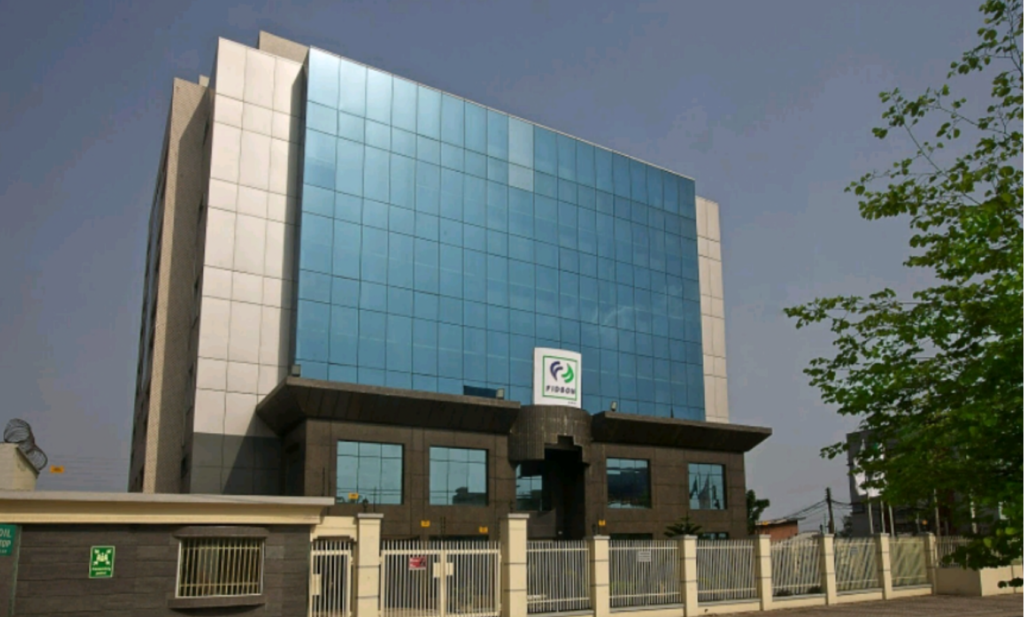
Fidson Healthcare has long been considered the “gold standard” of indigenous players in the Nigerian pharma industry, but 2025 marked its transition into a true market heavyweight.
- Aggressive Expansion: In late 2025, Fidson launched a landmark N21 billion Rights Issue. The goal was clear: to deleverage its balance sheet by paying down high-interest debt and to funnel N7.5 billion directly into capital expenditure (CapEx). This investment is being used to scale up its World Health Organization (WHO)-compliant facility, which now boasts ten production lines.
- Financial Dominance: The numbers tell a story of rapid capture. By the end of 2025, Fidson’s revenue surged to N119.1 billion (a massive jump from N53.1 billion in 2023). Even more impressive was its 132% year-on-year increase in Profit After Tax, reaching nearly N8 billion.
- Strategic Partnerships: Beyond local manufacturing, Fidson has looked outward, strengthening alliances with Japan’s Ohara Pharmaceutical to bring advanced technology to Nigeria’s factory floors, ensuring that “Made in Nigeria” drugs meet international therapeutic standards.
Case Study: May & Baker – The Trust Merchant
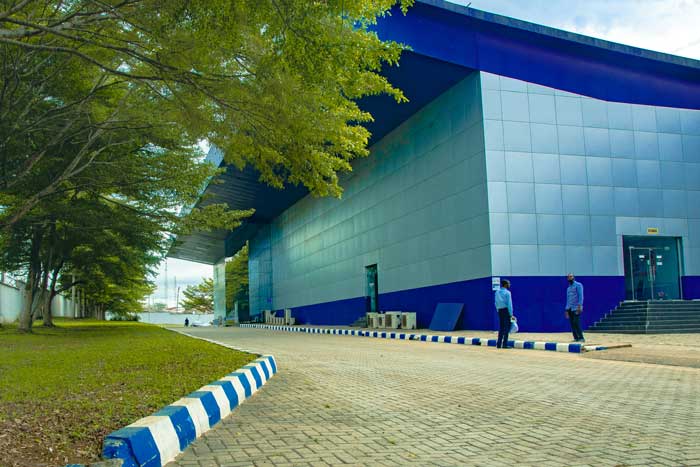
If Fidson is the aggressive expander, May & Baker (M&B) is the sector’s “safety net,” leveraging its 80-year heritage to maintain public trust.
- Filling the Chronic Care Gap: As GSK and Sanofi pulled back, May & Baker identified a critical vacuum in non-communicable diseases. In 2024 alone, they launched seven new products focused on cardiometabolic care, addressing the rising national burden of diabetes and hypertension with brands like Diamet SR and M&B Amlodipine.
- Operational Excellence: May & Baker has proven that local firms can be leaner and more efficient than their multinational predecessors. In 2025, the company grew its revenue to N38.2 billion (up 32%) while managing to double its operating profit. Its net profit margin hit 11.7%, a figure that outperformed the industry average and signaled to investors that local pharma is a high-yield frontier.
- Expanding the Footprint: To ensure they reach the “last mile,” May & Baker is not just manufacturing in Lagos; they recently announced plans for a new facility in Anambra State to decentralize production and strengthen their distribution network across the Southeast and South-South regions.
Check this out! Genomics and Personalized Medicine: The Future of Tailored Treatments
The Investor Verdict
The stock market has been the ultimate judge of this transition. In 2025, while the broader economy grappled with inflation, pharmaceutical stocks became the “immunity” for savvy investors. Fidson’s share price surged by 210%, while May & Baker delivered a 102% return, tripling the wealth of those who bet that local giants could fill the shoes of departing multinationals.
While the rise of local giants is a beacon of hope, the path to total self-sufficiency is littered with structural “potholes” that remain the industry’s greatest hurdles as we head toward 2027.
Challenges on the Horizon
1. The API Struggle: The Missing Link
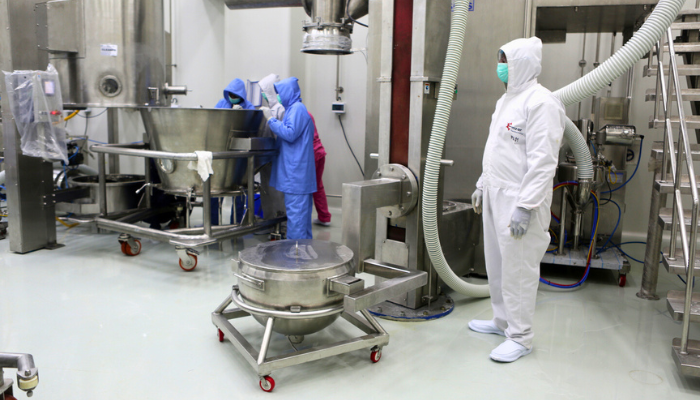
The most significant vulnerability for the Nigerian pharma industry is its near-total dependence on imported Active Pharmaceutical Ingredients (APIs)—the “soul” of the medicine.
- The Gap: Currently, the Nigerian Pharma Industry, for now, produces almost 0% of its required APIs, relying on shipments from India and China. This makes them highly susceptible to global supply shocks and foreign exchange volatility.
- The Sagamu Milestone: There is a glimmer of hope: Emzor Pharmaceutical is currently nearing completion of its $23 million API manufacturing plant in Sagamu, Ogun State. Expected to commence production in early 2026, it will be one of the first in Sub-Saharan Africa, initially focusing on antimalarial APIs like Artemether and Lumefantrine.
2. The “Band A” Power Burden
Manufacturing is an energy-intensive process, and the Nigerian pharma industry, just like the whole of Nigeria, wrestles with expensive and unreliable power supply.
- Cost of Energy: Many pharmaceutical hubs are categorized under “Band A” electricity tariffs (averaging N209.50 per kWh in early 2026). While this promises 20 hours of daily supply, manufacturers report that frequent outages still necessitate the use of industrial diesel generators.
- The Overhead Trap: Energy costs often account for 30% to 40% of total production expenses. Until industrial clusters are powered by dedicated gas-to-power or renewable mini-grids, local drugs will struggle to compete on price with cheap Asian imports.
3. The WHO Prequalification Hurdle
To compete for international donor-funded contracts (like those from the Global Fund or UNICEF), a manufacturer must have a WHO Prequalification (PQ).
- Status Update: Historically, no indigenous manufacturer in the Nigerian pharma industry has had a WHO-prequalified product. However, the tide is turning. Swiss Pharma (Swipha) recently achieved WHO PQ for two antimalarial products.
- The Investment Barrier: Achieving this standard requires a cumulative investment often exceeding $5 million to $10 million per facility for equipment upgrades and rigorous dossier preparation. Without “patient capital” or low-interest government loans, many smaller firms are locked out of the global export market.
The Future Outlook (2027 and Beyond)
As we look toward the next three years, the Nigerian Pharma Industry is moving from Import Substitution to Regional Dominance.
- AfCFTA Integration: With the African Continental Free Trade Area (AfCFTA), companies like Fidson and May & Baker are no longer just looking at the 200 million people in Nigeria, but the 1.3 billion consumers across Africa.
- The “National Health Fellows” Synergy: The government’s new fellowship programs are placing young professionals in every Local Government Area (LGA), creating a more structured “demand-side” for the drugs these local giants are producing.
- Digital Traceability: By 2026, NAFDAC’s mandatory Track-and-Trace technology (using GS1 barcodes) is expected to significantly reduce the market share of counterfeit drugs, effectively “cleaning up” the marketplace for legitimate local manufacturers.
Conclusion
The exit of GSK, Sanofi, and Pfizer was a painful wake-up call, but it ultimately forced Nigeria to start the journey towards breaking its “import addiction.”
The growth of Fidson, May & Baker, and the bold API entry by Emzor prove that the Nigerian pharma industry is no longer in a state of mourning. Instead, it is in a state of mobilization.
By 2030, the goal is for 70% of all medicines consumed in Nigeria to be produced within our borders. If the current momentum of policy support and local investment continues, the “Great Exit” of multinationals will be remembered not as the end of an era, but as the birth of a truly sovereign Nigerian healthcare system.